For eleven years, I sat at the center of magazine newsrooms, managing writers, designers, and photographers who were—without fail—always on the verge of either a breakthrough or a breakdown. I learned one hard truth during those years: inspiration is not a lightning bolt. It is not some random, mystical magic that descends from the ether when the moon is right. If you wait for inspiration, you will wait until your deadline has long since evaporated, along with your credibility.
The ability to start writing is not a character trait; it is a physical process of transitioning from one state of being to another. When you are stuck, you aren't "uncreative." You are simply overwhelmed by noise. And let’s be honest: our devices are designed to keep us that way. Social media algorithms are built to fragment your attention into million-dollar slivers, and the constant chime of notifications acts as a Pavlovian siren, dragging you away from your own thoughts before they even have a chance to settle.
So, here is the question I ask every client when they tell me they’ve been staring at a cursor for an hour: "What does this look like on a Tuesday at 3 pm?" Because that is when the caffeine has worn off, the inbox is a dumpster fire, and the world is trying to pull you in twelve different directions. If your writing process can’t survive a Tuesday at 3 pm, it isn’t a process; it’s a pipe dream.
The Ritual as a Bridge into Focus
To beat procrastination, you don’t need a massive paradigm shift or a week-long retreat. You need a bridge. A ritual is a psychological threshold. It tells your brain, "We are leaving the world of consumption and entering the world of production."
We often treat wellness as something separate from work—a spa day or a green juice after the stress has already done its damage. That’s backwards. True wellness in a creative culture is preventative. It is about protecting your cognitive load so that when you sit down to write, you aren’t already running on empty. If you haven’t slept well, no amount of "productivity hacks" will help you. Your brain requires fuel, and that fuel is rest.
Tech Distraction: The Enemy of the Flow State
Let's talk about the phone. I have, on several occasions, deleted a social media app mid-sentence because I realized it was vibrating in my periphery and ruining my train of thought. If an app makes you feel itchy, delete it. If it interrupts your flow, turn off the notifications. You are not a customer service representative for your own brain—you are the architect. If your environment is noisy, your writing will be fragmented.
When you feel that familiar itch to "just check the news" or "see if anyone liked that post," you are not being productive. You are indulging in a recovery habit that actually prevents recovery. You are seeking dopamine hits to compensate for the mental fatigue of trying to start your work.
Tiny Rituals (Under 2 Minutes)
I keep a running list of rituals that take less than two minutes. These are not grand ceremonies; they are functional, mundane triggers that signal to your nervous system that it is time to work. Here are the ones I use when I feel the most stuck:

- The Hardware Reset: Close every single tab on your browser except for the one document you are writing in. If you can’t close them, move them to a different "Desktop" space on your computer. Out of sight, out of mind. The Physical Anchor: Stand up, walk to the kitchen, and drink one full glass of room-temperature water. Do not look at your phone while walking. Just feel the weight of the glass. It resets your internal state. The Audio Signal: Put on a specific, instrumental-only playlist. I use one that I *never* listen to outside of writing hours. When the music starts, I have no choice but to start writing. The Five-Line Rule: Tell yourself you are only going to write five lines of absolute garbage. Don't worry about quality. Just get the kinetic energy moving. The "Do Not Disturb" Sweep: Manually toggle "Do Not Disturb" on your phone and place it screen-down in another room. If you can see the light blink, it’s not far enough away.
The Cost of Distraction vs. The Benefit of Ritual
It is helpful to look at how these choices impact your workday. Below is a comparison of how different approaches to the start of a writing session affect your output.
Action Impact on Focus Long-Term Result Checking Notifications High interference/Fragmented focus Burnout and "Creative Fatigue" Doomscrolling Algorithms Severe cognitive load Loss of original voice Applying a 2-min Ritual Clear mental threshold Consistent output/Flow state Prioritizing Sleep/Rest Foundation for deep work Long-term career sustainabilityBurnout Prevention is Part of the Work
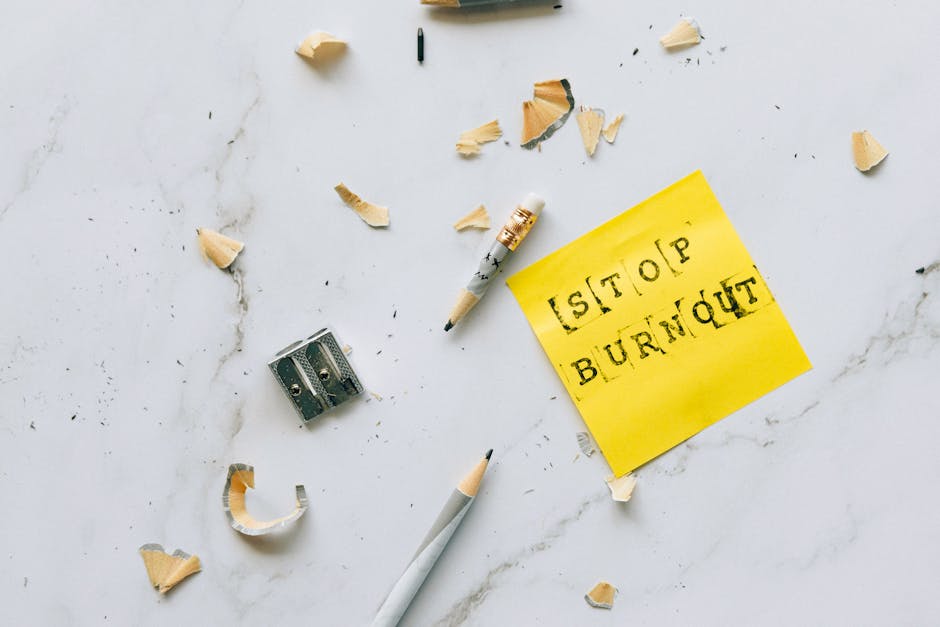
We need to stop pretending that being "always on" is a badge of honor. It isn't. It’s a fast track to resentment. If you are struggling to start writing, ask yourself if you are actually just burned out. Did you look at screens until you fell asleep? Did you eat lunch at your desk while reading emails? If so, you aren't stuck—you are depleted.
Burnout prevention is not "self-care" in the sense of bubble baths; it is the discipline of creating boundaries. It is the practice of saying "no" to the ping of a notification so that you can say "yes" to your own ideas. A digital boundaries solid writing ritual is the safest way to ensure that your creativity survives the pressure of a professional life.
Conclusion: The Tuesday Test
The next time you find yourself stuck, sitting in your chair on a Tuesday at 3 pm, do not berate yourself for a lack of willpower. Acknowledge the environment. Your phone is buzzing, the algorithms are hungry for your attention, and your energy is flagging.
Pick one ritual from the list above. Close the tabs. Put the phone in the other room. Drink the water. Give yourself permission to write five bad sentences. You aren't waiting for a miracle; you are simply building a bridge that allows you to walk from the noise of the world into the sanctuary of your own mind. That is how you write. That is how you stay sane. And that, more than anything else, is how you actually finish the work.